If you’re paying for personal life insurance, you may be considering whether a relevant life policy would be a better option.
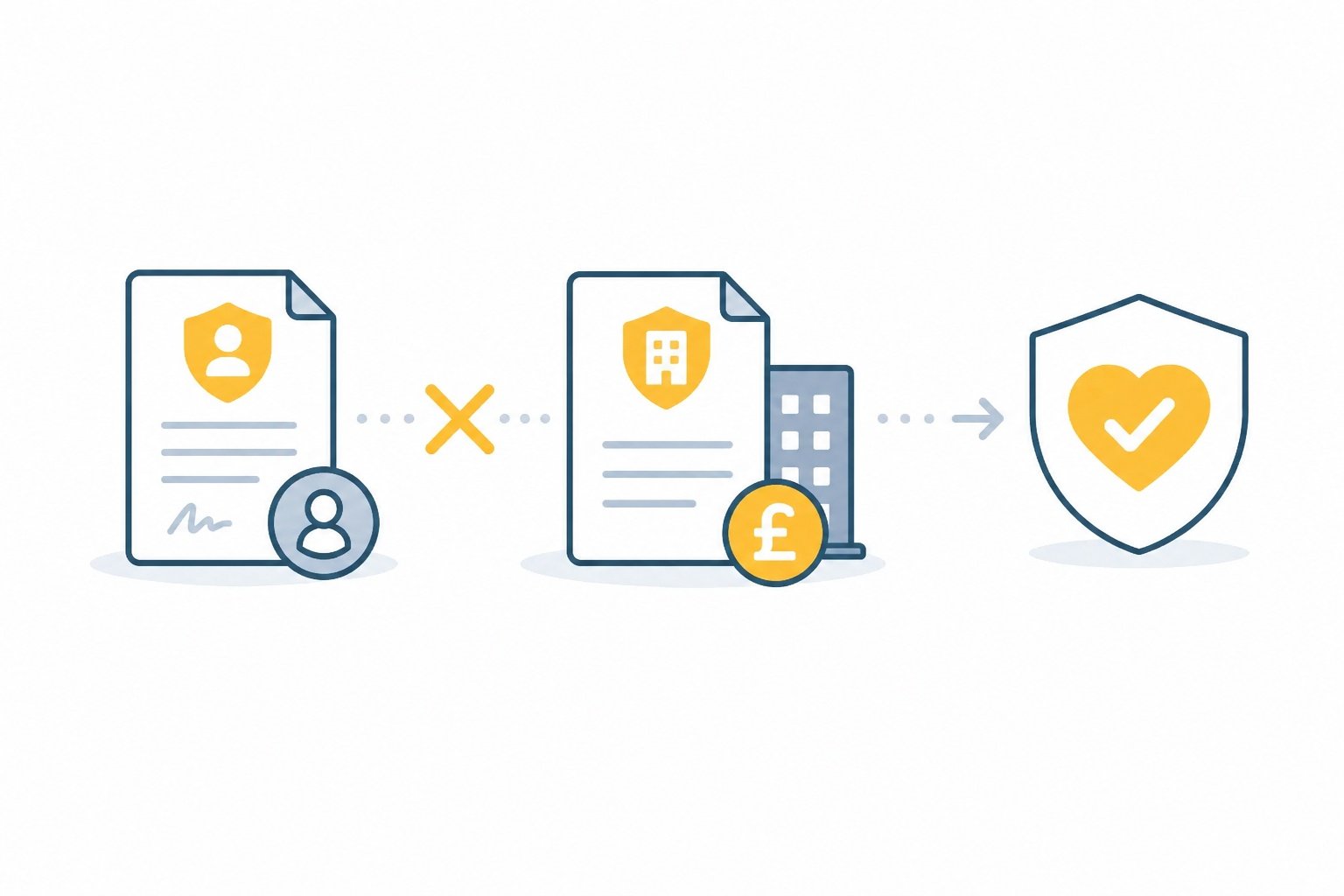
In most cases, the answer is no. A relevant life policy is a different type of arrangement with a different policy owner, so an existing personal policy cannot usually be switched across.
Instead, if you are now eligible to take out relevant life insurance, you would normally apply for a new policy through your limited company.
You cannot normally convert an existing personal life insurance policy into a relevant life policy because the two are owned, structured and taxed differently.
If you become eligible for relevant life insurance, your limited company will usually arrange a new policy in the name of the business for your benefit. Whether you keep or cancel your existing personal policy depends on your circumstances and the level of cover you need.
Before cancelling any existing policy, make sure your new cover has been accepted and is fully in force.
Why can’t I switch my personal policy?
Although both products provide life insurance, they are structured differently.
A personal life insurance policy is taken out by an individual and paid for from their own after-tax income.
A relevant life policy is arranged by a limited company for an employee or director. The company pays the premiums, and the policy is normally written into trust for the employee’s beneficiaries.
Because the policy owner, premium payer and legal structure are different, insurers do not generally convert one type of policy into the other.
What normally happens instead?
If you have started operating through a limited company, or have become a company director since taking out your personal policy, the usual approach is to apply for a new relevant life policy.
The insurer will assess the application in the same way as any new policy. This may involve answering medical questions, providing information about your occupation and confirming the amount of cover required.
Once the policy has been accepted, your company begins paying the premiums instead of you paying personally.
Should you cancel your existing policy?
Not immediately.
A common mistake is cancelling an existing life insurance policy before the new cover has been accepted.
If the new application is delayed, declined or offered on different terms, you could find yourself without the protection you expected.
It is usually sensible to wait until the new policy is fully in force before deciding whether your existing cover is still needed.
The right decision depends on factors such as your health, the amount of cover you require and whether your personal policy includes features that are not available under a relevant life arrangement.
Will you need another medical assessment?
Usually, yes.
When you set up a new relevant life policy, this is a brand new insurance application.
Depending on your age, health and the amount of cover requested, the insurer may ask medical questions, obtain a report from your GP or arrange a medical examination.
If your health has changed since taking out your original policy, this could affect the terms offered by the insurer.
Can you keep both policies?
Yes.
There is no general rule preventing someone from holding both a personal life insurance policy and a relevant life policy at the same time.
Some directors deliberately keep their existing personal cover and use a relevant life policy to increase the overall level of protection for their family.
Whether this is appropriate depends on your financial circumstances and the amount of life cover you need.
When does it make sense to switch?
Many people first arrange personal life insurance before starting a business.
Years later, they begin trading through a limited company and discover that relevant life insurance may offer a more tax-efficient way of paying for life cover.
In that situation, it is often worth reviewing your existing arrangements.
Rather than continuing to pay premiums personally, your company may be able to provide the cover instead, subject to the insurer’s acceptance and the usual HMRC rules.
You can read more in our guide to the tax benefits of relevant life insurance.
What if your personal policy has valuable features?
Not every personal policy is the same.
Some include guaranteed premiums, optional benefits or other features that may not be available under a new relevant life policy.
Before you replace your existing cover, compare the policies carefully rather than focusing only on the tax treatment.
It is also worth checking whether your existing insurer allows any flexibility if your circumstances have changed.
Who should consider reviewing their cover?
You may wish to review your life insurance if you have:
- started trading through a limited company;
- become a company director;
- moved from sole trader status to a limited company;
- taken on employees; or
- not reviewed your life cover for several years.
If you’ve recently started trading through a limited company, it’s worth reviewing your existing life insurance.
Frequently asked questions
Can my insurer transfer my existing policy?
Usually not. In most cases you will need to apply for a new relevant life policy rather than transferring an existing personal policy.
Will I lose my no-claims history?
Life insurance does not operate like motor insurance, so there is normally no no-claims discount to preserve.
Can I stop paying for my personal policy once the company starts paying?
Possibly, but only after deciding whether the new policy provides the level of cover you need and once it has started.
Can I have two life insurance policies at the same time?
Yes. Many people have more than one life insurance policy where the overall level of cover is appropriate.