One of the reasons relevant life insurance is popular with limited company directors is its favourable tax treatment.
That doesn’t just apply to Corporation Tax.
National Insurance is another area where qualifying relevant life policies are often more tax efficient than many other employee benefits.
If you’re considering taking out a policy through your company, it’s worth understanding why National Insurance is normally not payable on the premiums.
If you’re new to relevant life insurance, start with our guide to what relevant life insurance is.
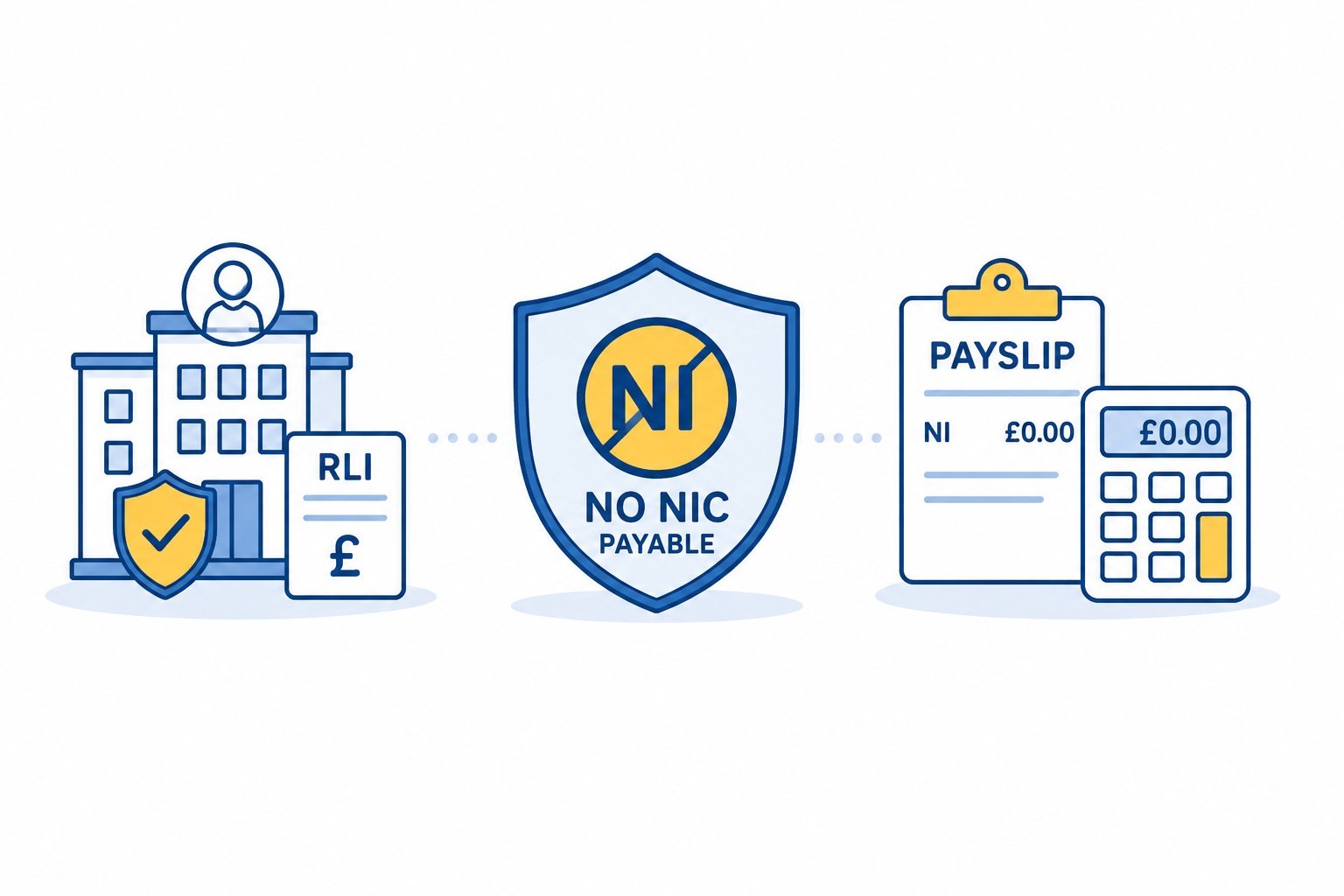
Qualifying relevant life insurance premiums are not normally treated as a taxable benefit in kind. As a result, the employee usually pays no National Insurance on the premiums, while the employer would not normally be liable for Class 1A National Insurance contributions.
Why National Insurance matters
Many employee benefits create a National Insurance liability.
For example, where an employer provides certain taxable benefits, the employer may have to pay Class 1A National Insurance contributions.
Employees may also face Income Tax consequences depending on how the benefit is treated.
Relevant life insurance is different because qualifying policies generally receive favourable tax treatment under the tax rules.
Does the employee pay National Insurance?
In most cases, no.
Provided the policy qualifies as a relevant life policy, the premiums are not normally treated as earnings or a taxable benefit for the employee.
That means the employee would not usually pay National Insurance on the value of the premiums.
Does the employer pay National Insurance?
Again, normally no.
Because qualifying relevant life insurance is generally exempt from benefit in kind treatment, employers would not usually pay Class 1A National Insurance contributions on the premiums.
This is one of the reasons relevant life insurance is often more tax efficient than simply paying extra salary and asking the director to arrange personal life insurance.
How does this compare with paying extra salary?
Suppose a company wants to spend £1,000 providing life cover for a director.
If the company pays an extra £1,000 in salary instead, that payment would normally be subject to:
- Income Tax
- employee National Insurance
- employer National Insurance
The director would then have to pay for personal life insurance from their net income.
With a qualifying relevant life policy, the company pays the premium directly.
The premiums are not normally treated as taxable earnings, so those additional National Insurance charges generally do not arise.
Does this mean every policy avoids National Insurance?
No.
The favourable treatment depends on the policy qualifying as relevant life insurance.
If the arrangement does not satisfy the relevant legislative conditions, the normal tax treatment may apply instead.
That’s one reason it’s important to arrange the policy correctly from the outset.
Our guide to setting up relevant life insurance explains the process.
HMRC’s guidance
HMRC’s Employment Income Manual explains how qualifying relevant life policies are treated for tax purposes.
Where the relevant conditions are met, the premiums are generally exempt from benefit in kind treatment.
In practice, that is why Class 1A National Insurance contributions do not normally arise.
You can read HMRC’s guidance here:
Employment Income Manual – EIM15045
Does this affect Corporation Tax?
National Insurance and Corporation Tax are separate issues.
Even where no National Insurance is payable, the company may also be able to claim Corporation Tax relief on the premiums if the usual conditions are satisfied.
Read:
Do the premiums appear on a P11D?
Normally they do not.
Because qualifying relevant life insurance is generally exempt from benefit in kind treatment, the premiums would not usually need to be reported on a P11D.
Our separate guide explains whether relevant life insurance appears on a P11D.
Does National Insurance affect the amount of cover?
No.
The amount of cover available is normally determined by factors such as:
- your age
- your remuneration
- the insurer’s underwriting limits
- your health
You can read more in:
Frequently asked questions
Does an employee pay National Insurance on relevant life insurance?
Normally no, provided the policy qualifies as relevant life insurance.
Does the employer pay Class 1A National Insurance?
Qualifying relevant life insurance premiums do not normally give rise to Class 1A National Insurance contributions.
Why is relevant life insurance tax efficient?
Qualifying policies can offer favourable treatment for Income Tax, National Insurance and Corporation Tax, although the exact position depends on the individual circumstances.
Where can I read HMRC’s guidance?
HMRC’s Employment Income Manual explains how qualifying relevant life policies are treated for tax purposes: