Age is one of the main factors insurers consider when offering relevant life insurance.
It can affect whether you’re eligible for cover, how much cover is available and, perhaps most noticeably, how much the premiums cost.
There are two different age issues to understand.
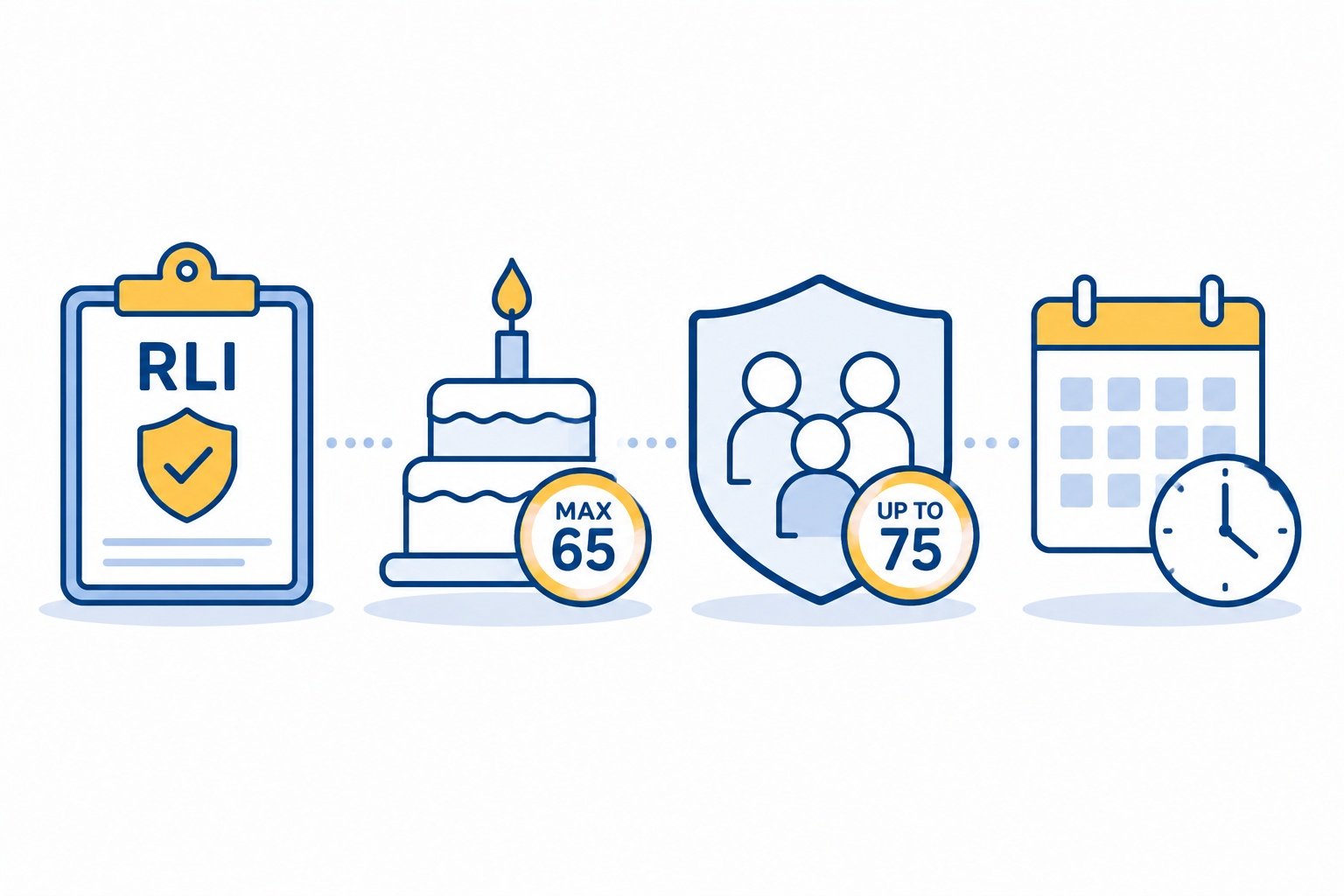
First, insurers set their own minimum and maximum entry ages. Second, HMRC’s rules require a qualifying relevant life policy to specify an age above which death benefits are no longer payable. That age must not exceed 75.
If you’re considering taking out a policy through your limited company, it’s worth understanding both points.
If you’re new to relevant life insurance, start with our guide to what relevant life insurance is.
A qualifying relevant life policy must specify an age above which death benefits are not payable, and that age must not exceed 75. Insurers may also set their own maximum entry ages, so directors applying later in their careers should compare providers carefully.
Is there a minimum age?
Yes.
Relevant life insurance is intended for employees and directors, so applicants must be adults.
Most people who take out a policy are established company directors or employees rather than those at the start of their careers.
Is there a maximum age to apply?
Usually, yes.
Each insurer sets its own underwriting criteria, including the oldest age at which a new policy can begin.
That maximum entry age varies between providers.
If you’re approaching retirement, it’s worth comparing insurers because some may offer greater flexibility than others.
Our guide to relevant life insurance providers explains why provider choice can matter.
What are the typical age limits?
Every insurer sets its own entry limits, so there isn’t a single maximum application age that applies across the market.
Many providers accept new applications from adults up to around age 70, although this varies by insurer, health, policy term and the amount of cover required.
However, there is a separate HMRC rule that matters for tax treatment.
For a policy to qualify as a relevant life policy, it must specify an age above which death benefits are not payable, and that age must not exceed 75.
That means a policy designed to qualify for the usual relevant life tax treatment cannot provide death benefits beyond age 75.
Why age 75 matters
The age 75 rule is not just an insurer preference.
It comes from the rules for excepted group life policies, which relevant life insurance relies on for its favourable tax treatment.
HMRC’s Insurance Policyholder Taxation Manual explains that the policy terms must specify an age above which death benefits are not payable, and that age must not exceed 75.
You can read HMRC’s guidance here: IPTM7025.
Our guide to HMRC’s rules on relevant life insurance explains the wider qualifying conditions.
When does the cover end?
Relevant life insurance isn’t designed to provide lifelong cover.
Instead, the policy runs for a fixed term chosen when the application is made.
Many policies are structured to end around the director’s intended retirement date.
In any event, for the policy to qualify for the usual relevant life tax treatment, death benefits must cease before age 75.
Once the policy reaches its expiry date, the cover ends unless a replacement policy has been arranged.
Why does age affect the premium?
Life insurance is based on risk.
In general, the older someone is when they apply, the greater the statistical likelihood that the insurer will have to pay a claim during the policy term.
As a result, premiums normally increase with age.
Other factors also influence the cost, including:
- the amount of cover
- the policy term
- medical history
- smoking status
- the insurer’s underwriting assessment
You can read more in our guides to how the underwriting process works and how much relevant life insurance costs.
Does age affect the amount of cover?
It can.
Insurers usually assess each application individually.
Alongside remuneration and health, age may influence the maximum level of cover an insurer is prepared to offer.
For example, a younger director taking out a long-term policy may be offered different limits from someone applying later in their career.
Our guide to how much relevant life insurance you need explains how cover is typically calculated.
Can older directors still take out relevant life insurance?
Often, yes.
Many directors arrange relevant life insurance well into their fifties or sixties.
Whether cover is available depends on factors such as:
- your age
- your health
- the policy term
- the insurer’s underwriting rules
Every application is assessed on its own merits.
The main point is that the policy must still be structured so that death benefits cease before age 75 if the usual relevant life tax treatment is to apply.
Does age affect the tax treatment?
Age does not change the tax treatment by itself.
What matters is whether the policy satisfies the relevant conditions.
One of those conditions is the age 75 rule. If a policy provides death benefits beyond the permitted age, it would not normally qualify for the favourable tax treatment associated with relevant life insurance.
You can read more in:
- Tax benefits of relevant life insurance
- Is relevant life insurance a business expense?
- Does relevant life insurance appear on a P11D?
What does HMRC say?
HMRC’s guidance does not set a single maximum entry age for applications. That is usually an insurer underwriting matter.
However, HMRC does set an important condition for the policy terms.
For an excepted group life policy, the policy must specify an age above which no death benefits are payable, and that age must not exceed 75.
This is explained in HMRC’s Insurance Policyholder Taxation Manual at IPTM7025.
Frequently asked questions
What is the maximum age for relevant life insurance?
For tax purposes, a qualifying relevant life policy must specify an age above which death benefits are not payable, and that age must not exceed 75. Insurers may also set their own maximum entry ages for new applications.
Can directors over 60 take out relevant life insurance?
Often, yes. Availability depends on the insurer, your health, the level of cover and the length of cover required.
Can a relevant life policy continue beyond age 75?
Not if it is to qualify for the usual favourable tax treatment. HMRC’s rules require the policy to specify that death benefits cease before age 75.
Do premiums increase with age?
Generally, yes. Older applicants usually pay higher premiums because the insurer is taking on greater risk.
Does retirement automatically cancel the policy?
Not necessarily, although many policies are arranged to end around retirement. The position depends on the policy terms and your employment circumstances, but the age 75 limit remains important for relevant life tax treatment.